Tuesday, April 5, 2011

Few Heads Are Better Than One

As I was thinking about my lesson plan and how I wanted it to look, I remembered that chapter 11 from Science Stories is all about planning. What I loved most about the chapter was that it talked about collaboration. I am a huge fan of group because I think students get a lot out of working together and it motivates them to work harder so they are a productive member of the group. As I was researching the best ways to do cooperative learning, I came across a wonderful video.


I was intrigued from the beginning because I was thinking, "This must be a joke, they are lego people!" But I decided to click on it anyway and I am so glad I did. I learned so much from the three minutes this video played, and I literally had to bookmark it because I loved the strategies so much. Here are a few things I learned:
  1. Don't judge a book by its' cover. Okay, I know that's a little cliche, but it is the truth. I thought this person was making a joke, but it turned out to be amazing. I found a new website called Xtranormal. I don't think it is free, but the idea is awesome. Apparently you can create your own videos just by typing! The teacher that posted this video created a few more highlighting other topics and I'm sure her students love it. 
  2. Teach the obvious. I thought it was really great that the video opened with the teacher explaining how to work in groups. It is easy to get so carried away with the lesson, and forgot the obvious things. Working together is a skill that has to be acquired, and just like riding a bike or writing in cursive, skills have to be practiced. I absolutely loved that she brought her class together and asked them what they thought groups should look like. 
  3. Think like a child. I have never heard, or seen, better strategies than what the video described for holding students acceptable and pairing them up. Each idea was better than the next. I will 100% keep a can of popsicle sticks on my desk, and I know I keep repeating myself but I'm just so excited about these strategies! The playing cards and the pairs! Peanut butter and jelly! I really can't wait to try these!
After discovering this video, I realized another important function of the textbook. It's a resource that should spark new ideas and encourage research. While it has so many valuable lessons, its not the only thing to work from. I think I always knew that, but I sort of forgot it, and chapter 11 reminded me of what learning is all about. 

Wednesday, March 30, 2011

"Shouldn't you know everything already?"

Fieldwork started recently and all three sessions have been really exciting. I love the first day of fieldwork because I never know what to expect and I love to see what child (or children) I will get to work with. When our class first walked in the classroom, we were introduced to Mrs. Benfer and she could not have been any nicer. During the first meeting, we lined up along the walls and the students walked in. I had to laugh because their eyes widened and slowly sunk into their seats. I can't imagine how funny it looked with all these older people standing up around them.

As Mrs. Benfer got into her lesson, I absolutely loved her visual demonstration of mixtures and solutions. Her students were so excited to because she used M&Ms! It's amazing how something so small can bring so much joy to them! I don't know if it was because the kids were interested in the food, but I was so impressed at how well they were behaving! She didn't need to stop once to refocus them or ask somebody to pay attention. I think it shows how well she kept her students engaged. 


When she was finished, it was time to meet my students. I walked up to little girl who had not yet been given a "college buddy" and asked if she would like to work with me. As we were getting to know each other,  another little girl walked over who did not have a buddy either. The two students I work with are extremely bright and friendly. They love to talk, but I was impressed with them because if they felt they were talking a little too much they would start reading from the book. I wanted to get to know the girls a little better so I asked them what their favorite subjects were in school. One student said English, and the other one said math and science. Trying to make them feel more comfortable with me, I said, "Oh wow that's great. I'm not so good in math so maybe you could help me with that!" Of course I was trying to be funny, but I wanted to show the girls that it is okay and you don't have to be an expert in every subject. However, the answer I got actually made me laugh out loud. The student looked at me sort of confused and said, "Wait. You're in college, shouldn't you know everything already?" All I could say to that was, "I wish I knew everything!"

Monday, March 21, 2011

Another New Skill


I titled this post "Another New Skill" because I never knew I could do a snapshot on my computer. Because I have a Macbook, most things that are on the school's computers are not present on mine. For example, I do not have a Print Screen button on my keyboard, so I had to learn how to do it. Even though it only took a quick Google search, I was happy I learned about this because I think it will be able to help me greatly. Especially when I am working with friends at home and they are still at school. 

I inserted the snapshot of my quiz here and I thought the website was great. It was inviting and it was very easy to use, which I thought would be perfect for a young student. Children today love anything that is electronic, so I think this interactive quiz is a wonderful idea. Teachers can see how their students are doing, and the students will be more motivated to do their best if they are doing something they enjoy. 

A Jigsaw Journey


Since I've had some time to reflect on the Jigsaw Activity we completed in class, I have to be honest about my feelings toward it, and my feelings were conflicting. Before we started, I was excited to see what it was all about because I have heard about the strategy; but I've never had the opportunity to actually do it. Once my group was chosen and we began working, it seemed a little chaotic. All of the members of my 'expert' group had the same information and we seemed to hit a minor roadblock when it came to presenting the information to our base group. I think we all had so many ideas and just not enough time due to the craziness of each of our schedules.

When I got back to my base group, I was so concerned about getting my information across to my classmates that I honestly found it difficult to focus when the other members were speaking. I was frantically taking notes on their material just hoping to get everything written down that I needed. There was so much information on the different topics that I only remember facts from my 'expert' group. 

I'm not sure if I would do this activity in a classroom because I feel there are quite a few ways it could go wrong. I did some research on the Jigsaw Activity and I found this website which goes into much more detail on the history and steps of implementing this technique. However, I think it has potential for older grades because of its complexity and it showcases independence.

Wicked Weather

While I was running in the rain and sleet today, I was talking to a friend who told me that we were supposed to get snow on Wednesday! I honestly didn't want to believe it, so when I got home from my classes today I had to take a look on the computer. Sure enough, she was right. After the gorgeous weather on friday, it is hard for me to accept that the cold weather is back. I went to a weather website to get my information because I wanted to find out just how much snow there is going to be. However, it is still two days away so the weather reports aren't as accurate as they will be tomorrow. But even though we don't know quite how much to expect yet, nasty weather is on its way, whether it be snow, ice, sleet, or even more rain.

map_wkpln_day3_3usne_enus_600x405.jpg

Sunday, March 20, 2011

A New Perspective

Within reading the first sentence of this blog post, I had to stop and do some research. I had never heard of the website "Edmodo" before and I actually surprised when I found it on the internet. It was clean, neat, and very user-friendly. It even had a short video to watch which explained everything that Edmodo was about. It was exciting and intimidating at the same time. Even though I love technology and I can't imagine my life without it, it is a never-ending field of study. Sometimes I feel like if I don't do research on what is out there every single day, I will end up being completely lost. However, when I do learn something new I definitely feel better, both personally and educationally.

As I moved on to the actual blog post by the middle school teacher, I was inspired by his commitment and passion for teaching his students. He is truly dedicated to teaching his students in the best way he knows how, which is not as conventional as just a pencil and paper. However, he sees that technology is the way of the future and using Edmodo has made instruction easier and more entertaining for his students.

I also thought it was pretty interesting that he only gave his students a few directions. I was torn on this method because I think there is a fine line between giving students the directions they need to explore on their own, and not giving them enough directions so they become frustrated. Being someone that loves directions, I think it was a little intimidating for me put myself in his students shows and only be given four instructions. But as I kept reading, he wrote about how his students loved the activity and couldn't wait to do it again. I realized that it was great idea for older students who are craving independence and the ability to show their elders they can do things on their own. I can't help but think that if I was given more opportunities to explore on my own in grade school, I would be more enthusiastic about his methods.

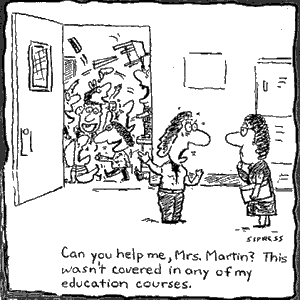
I thought this cartoon was so ironic because of the nature of this teacher's blog and the exciting direction our own class has taken since the beginning of the year.


Wednesday, March 9, 2011

Organized Mess


I never thought an entire chapter in a textbook would be basically devoted to making a mess. Even though chapter six was called "Matter Matters," much of the focus was on messiness. Children are not typically 'neat' to begin with, so why would we expect them to be neat when we give them potentially messy, but fun materials? I completely agree with the author in that it sometimes is okay to be a little flexible and give the students a bit of control. How much control, however, depends on the students in the classroom. I think it is important to distinguish between letting children explore on their own, but still be there to scaffold them. To me, science is all about experimenting, and there is no way you can do that without being clean!

In my experience, science in elementary school was very black and white. I never remember discovering things for myself, but rather I was told facts or read them in a book. The only time I ever did an experiment, was in the science fair, in it was optional to participate. So, Lisa Schneier's quote made so much sense to me. I absolutely felt like an outsider learning science. During class I rarely raised my hand, and on tests I memorized all the definitions I could. Hopefully, I can change that for my students. No matter what the subject is, memorizing things is no way to build excitement for learning.

Another interesting thing I noticed in the discussion questions was how would handle a question I didn't know the answer too. Since I'm not a computer, I obviously won't know the answer to anything. I don't see it as something I need to "handle," it just is what it is. Moreover, I think my students would appreciate know that like them, I am not perfect either and there are some things we just don't know. I would use it as a learning experience to show that you can learn about anything you want to, and just because you don't know the answer to something, you should never stop learning.

Tuesday, March 1, 2011

Science Circus!

After completing the science circus activity this week, it really got me thinking about how I would handle the chaos in my own classroom. Doing the entire thing in class really taught me a few things about what I would keep, and what I would change.

  1. I thought it was great we got time in class to go through our own station first so we could work out the kinks ourselves. I thought it was crucial for us to get that time because it's one thing to come up with the idea for a station, but actually doing it is something else. I will for sure give my students that time to work on their own stations because for those reasons, and it will also give them the opportunity to be "experts" in their own area. 
  2. If at all possible, I would do my best to have smaller groups. Ideally I would like three or four kids to a station because more than that gets a little too crazy. WIth that many people it's easy to get lazy or just fall by the wayside. I believe each person needs a job or else certain members of the group with do everything and others won't participate. I also believe it allows for better coordination because with fewer voices, the children's ideas will be heard. 
  3. I loved that each table had a different focus. In a situation that could potentially be overwhelming, I think the sections provided some balance. I thought this was a great way to keep the students organized and also offer a little diversity among the stations. 
All in all I think science circus was a great experience. To be honest, I never really thought of doing stations in science class because the circuit seems like something reserved for literacy. But it was eye-opening to see that it actually is possible and provides children with so many valuable learning experiences. Especially, on so many different levels. Within the stations students are teachers, learners, scribes, communicators, observers, thinkers, and the list goes on and on. It also inspired me to look for some more ideas on the topic and I found this cute video. Enjoy!


Sunday, February 20, 2011

A Method to the Madness

I was searching around the internet the other day looking for a website that a heard about in class, teachertube.com. At first I thought Dr. Smirnova was joking when she said it because it sounded so funny, but when I made my way over the the website it was pretty amazing. It has videos, pictures, and even documents for teachers from all over just trying to help each other out. I decided to click on most popular videos just to see what would come up, and I was really surprised at what I found. A video popped up that simply said, "Pay Attention." The entire video is a black screen with white words floating across the page, but the information is incredible. After watching the video it got me thinking about the past week and why we were doing what we did in class. Why did we have to find an article about science in the news? Why did we create podcasts of our scientist interviews? Why do we have to make posts on our blog?

Even though I sort of already knew many of these answers, the video I watched reaffirmed everything I believed. We grew up in an age of exploding technology and instead of trying to beat it, we need to join it. At the beginning of this week, I have to admit I was beginning to get a little overwhelmed. Between the moon log and the chapters and the posts and the projects and the presentations, it all seemed to catch up to me very quickly. I mean I looked at the calender and it was 'week 5' already? I couldn't believe it. But between listening to Dr. Smirnova's former student and watching this video, everything became extremely clear. The work we are doing is for us, not for any one else. The fact the Dr. Smirnova sees that and helps us along the way, it's just really refreshing. I think the reason most of us felt completely overwhelmed at the beginning of this class was because we aren't used to having a professor who isn't concerned about just grades, but also our success. We have proven we can all be good students, but can we be good learners? It is a question I will continue to ask myself probably for a long time until I am able to find the answer.

In the end, this week was kind of a break through. Everything I do from now on will be for me, and my career. The blogs, the podcasts, the smart board, the research, the internet, the technology...it is all worth it. We are going to be teaching kids who have been born into a world of instant gratification and being constantly entertained. It is up to us, as future teachers, to do what we have to do and learn everything we can so we can reach and teach every child. I truly believe Dr. Smirnova is helping us make that happen.

Friday, February 18, 2011

The groundhog was right!


This morning I actually woke up to the sun shining in my bedroom window and the birds chirping. The weather today has been amazing and I am so happy to finally be seeing grass on my front lawn. As I was walking from class to class today, it was impossible to not to notice the affect the weather had on people. When it was freezing, people walked by themselves with their heads down trying to get to where they needed to be as fast as they could. But today, everyone was laughing and taking their time  and just enjoying being outside. It was truly invigorating. With everything melting, it is getting me extremely excited for spring. Yet I keep telling myself it's only February. I really hope the groundhog was right this year and spring does come early. I'm so ready for flip flops and I can't wait to put the uggs away! 

Friday, February 11, 2011

Interview with Dr. Moran


This link is for our interview with Dr. Moran. He was very kind and accommodating and Amanda and I really enjoyed speaking with him! However, it wasn't as easy as we thought to get the interview. When Amanda and I first walked in to Dr. Moran's office, he seemed shocked that we needed something from him on a friday afternoon. So we began explaining our project to him and he was a little less than enthused. Looking back, we probably should have e-mailed him before we went to his office, but we honestly did not think it was going to be an issue. Eventually Dr. Moran agreed to help us so Amanda and I set up the computer and we got the interview started. As the three of us were talking, the conversation flowed smoothly and he actually had some very interesting insights. I thought it was great that his family instilled a love a science in him early on. I truly believe he loves his job and he's doing it for the right reasons. He seems extremely passionate about wanting to help students love science and go on to have a successful careers. I thought it was a great interview and we were very thankful that Dr. Moran was able to give us a few moments of his time, especially on a friday!

Sunday, February 6, 2011

Little Scientists

Knowing that you can't learn for you students is a hard concept to grasp. I mean I know it's impossible, but actually reading it proves a stronger point. Dreaming of being the education profession, I think I went into it with this feeling that I was going to be able to change the lives of all my students. Even though I still believe that, I am a little more realistic now that I am older. In no way have I lowered my expectations, I just think the quote made me realize not to take things personally if a few students don't learn every single lesson. I believe children have to be truly interested in what they are learning to get everything they can out of it. Even I am not interested in every single topic, so I wouldn't expect my students to be either. However, I wouldn't want my students to just give me answers because they think that's what I'm looking for. I'm guilty of it and I hope to change that. I think children try to use big words and add extra information to make their answers seem longer. I think children really want to impress their teachers, especially when they aren't comfortable with the material they learned.

I think it was awesome Mr. Wilson let his students explore the icicles in their own way. I feel it would have really discouraged the children if he stopped and corrected them. By letting them discover the melting for themselves, they were able to use trial and error. He created an extremely comfortable environment for them, in which one student didn't even participate in the project he planned. I think that takes an amazing amount of patience and flexibility, two important qualities teachers need to have. I think many teachers would have felt out of control in that situation because things didn't go according to plan, but Mr. Wilson was able to look past that and see what was truly important for his students to learn. He didn't ask them to memorize definitions and he didn't try to teach new concepts while they were exploring. He just let them be and become scientists. 


I chose to put in the cartoon above because I think it fits perfectly with this post and even blog in general. Our science class is like the "neighborhood" and this chapter was sort of about using things in your own life that can relate to science, just like the icicles. I think it's important for kids to use things that are familiar to you and your students because there is already prior knowledge there. Living in such a beautiful area, the Hudson Valley has unlimited resources. Trees, water, and even small animals are all around us and they are the perfect additions to any science experiment. 

Winter Wonderland?

Some icicles hanging outside my window!
They were so huge I couldn't even get them all in the picture!

The weather the past few weeks has been absolutely crazy. At the beginning of the year when we were having all of these storms, I thought it was great. I love watching the snow fall and I don't even mind shoveling. But lately, it has been out of control. The ice storms are so dangerous and my black car looks white from all the salt. If it was just white fluffy snow, maybe I would feel different but the ice is just making everything difficult. Thankfully its been a little warmer so everything has melted off the power lines and branches. I'm so ready for Spring! I can't wait for the day I can go to school or work without having to warm up the car! 

Tuesday, February 1, 2011

New Beginnings

Even though I'm already three posts into this blog, I neglected to talk about how this whole thing got started. A new year signifies a new beginning, much like the start of a new semester. While it can be a little scary, it can also be very exciting. A new semester is a chance to obviously learn new things and even improve on skills that aren't so great. 

When I walked into science methods for the first time, I was ready for a new beginning. I sat down next to a bunch of familiar faces and class immediately began with ice breakers. We were given pieces of construction paper and were told to simply write our names and we could even draw something that represented who we were. Even though it seemed like a minor detail, it was important to me because it showed me the professor actually cared who we were. Of all my five classes, science methods was the only one where we were given the opportunity to be creative. I also loved how we had to write down our science experiences and feelings about the topic. As much as it was for Dr. Smirnova to get a deeper understanding of who we are, it was also for me too. It forced me to think about science and answer questions I never even thought about. 

It was really important that we spent that first day thinking about ourselves as scientists, and even as students. As a teacher, I think it's extremely important to get to know your students. Especially in elementary school, hobbies and interests are the most important things in kids lives. Knowing what your students like and dislike can be a huge help when trying to make lessons and I think it can make a huge difference. Ice breakers are a great way to get to know your students, let your students know you, and even create a comfortable environment for everyone. 


Sunday, January 30, 2011

"Kids on Science" GREAT VIDEO!


I found this video and it relates perfectly to chapter 2. The kids are so cute and it opened my eyes that just because I don't love science, some of my students might. I need to be there for them and it's not all about me. Some of these girls in the video love science and if any of my future students are like this, I want to be able to give them everything they need to make their dreams come true. 

Mad Scientist


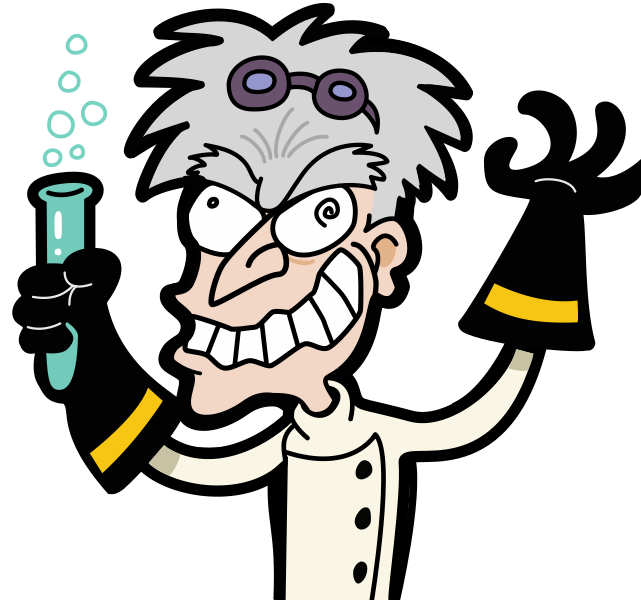
After reading about the "typical" scientist, I was interested to see what would come up if I googled it and this was the first picture. I couldn't help but laugh because the clip art is the perfect example of everything the textbook is trying to get away from. It's impossible to blame students for their stereotypic ideas because that's all they see. I am even guilty of this. When we were asked to create what we thought a scientist should be like, I immediately looked for a "nerdy" girl with huge classes and a crazy, eclectic sense a style. Knowing that myself and my classmates are the next generation of teachers, it is exciting to know we have to opportunity to change how children think about the subject and who's involved in it.

Knowing I have this huge responsibly to instill a love of science in my students, it's imperative I find my scientific self. The textbook spoke about how children can see right through the acting and know how you really feel about a subject. It's no secret that me and science don't really get along right now, but I consider this semester a journey. A journey to appreciate science and learn to have a genuine love for it. Teachers I have had in the past were never enthusiastic or seemed to give much thought to teaching their classes, especially in middle and high school. It was like my teachers had the same lesson plans for 20 years and never thought to change them. I need to get those experiences out of my head and begin thinking like a scientist. But right now, I really am a blank slate. I honestly cannot name one woman or minority scientist. And being a woman, that's a little embarrassing.

I have the chance to learn so much about science and nature, and this semester I intend to. There are so many things I take a lot for granted in my own environment and I live in a beautiful area which provides me with endless opportunity for discovery.

Saturday, January 29, 2011

"Lend me your eyes, I can change what you see"

After reading chapter 1 and answering the discussion questions, it made me realize just how little I think about science. Even though we are faced with it every day, I go through my daily life expecting things to happen and not knowing why. It's ironic it took me a homework question to figure out I needed a whole new way of thinking. I need a scientific way of thinking. My old schema about science was simply, "It happens that way, because that's just the way it happens." I never took a moment to think why does my straightener get so hot? Why do my fingers wrinkle when I'm in the pool? Why is the sky blue? I know it's a little dramatic to try to know everything, but the question just made me a little curious. If i took the time to try to understand a little more about why things work they way the do, I might come to appreciate science a little more.

However, I don't completely blame myself for my disinterest in the subject. It's not that I don't like it, or couldn't grow to like it, it just that all my experiences with it have been everything but pleasant. Elementary school began the draining cycle of read, memorize, and test. By the end of high school, I really couldn't stand science because it had nothing to do with my life (I thought) and I really was never going to use it. My attitude was, "I'm never going to be a scientist, so what's the point?" Even though I knew from second grade I wanted to be a teacher, teaching science was never really something the crossed my mind. However, now that I'm older have had to opportunity to think about it, I want to make science for my students the exact opposite of what it was for me. I want to make it fun. Students today just recite what they learn without really knowing anything about it. With all the technology we have today, children are already little scientists and they probably don't even know it. I want to be the one who opens their eyes to a whole new, exiciting, and scientific way of looking at the world.